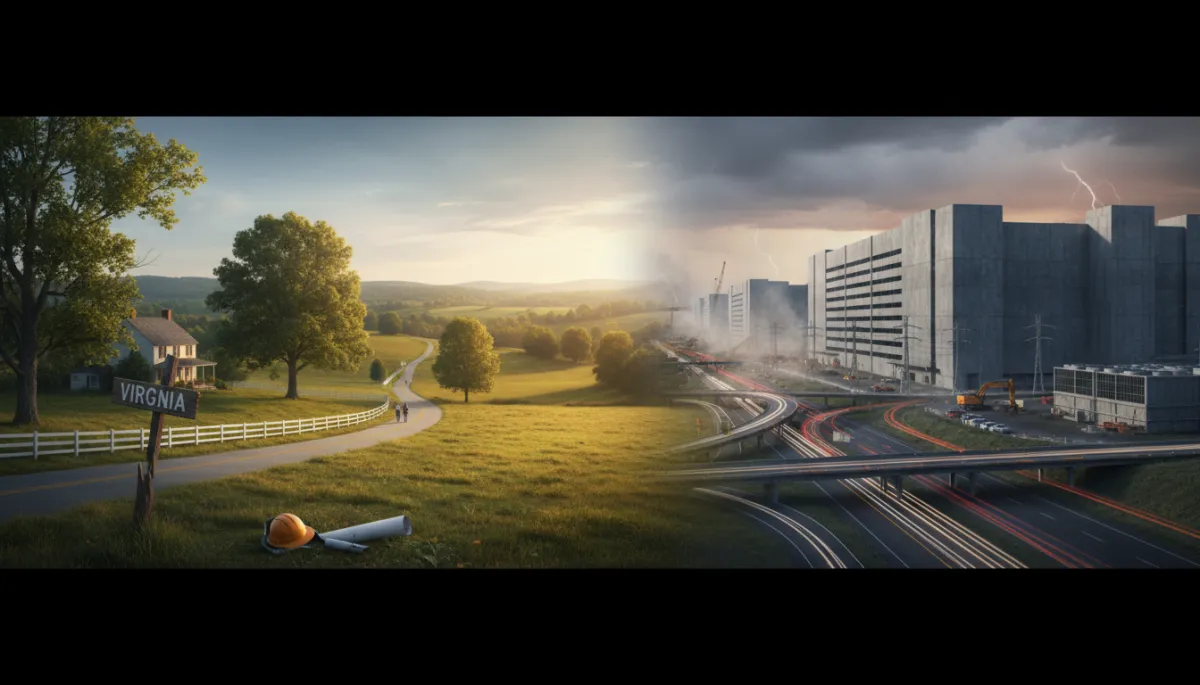
Virginia Data Centers Impact Homeowners
Data Centers Are Changing Virginia, Virginia homeowners, Spotsylvania data centers, Fredericksburg data centers, Stafford data centers, leaving Virginia, moving out of Virginia, Virginia Exit Plan
Data Centers Are Changing Virginia — And Some Homeowners Have Had Enough
If you bought a home in Spotsylvania, Fredericksburg, Stafford, Northern Virginia, or anywhere along the I‑95 corridor because you wanted a quieter, more grounded Virginia life, you’re not imagining it: things are changing fast. And for a lot of homeowners, it no longer feels like the place they chose years ago.
Maybe you remember when your road was mostly local traffic, when the loudest thing at night was a distant train or crickets. Now, it’s construction trucks, backup beepers, and the low mechanical hum from massive buildings that don’t sleep. You hear about data centers bringing “billions in investment” and “huge tax revenue,” but nobody seems to be asking you what it feels like to live next to all of this.
You’re not anti‑growth. You’re not against jobs. But you are tired of watching your community get reshaped around priorities that don’t seem to include the people who already live here. And if you’ve caught yourself wondering whether it’s time to leave Virginia or at least move away from the data center boom, you are far from alone.
This Is Not Just About Buildings
When people talk about Spotsylvania data centers, Fredericksburg data centers, or the huge campuses going up in Stafford, they usually talk in numbers: square footage, megawatts, jobs, tax revenue. But if you live nearby, you don’t experience this as numbers. You experience it as daily life getting harder, louder, and more stressful.
A data center isn’t just a big box on a site plan. It’s months or years of construction traffic grinding past your driveway. It’s utility crews tearing up roads and rights‑of‑way to run more power. It’s the constant worry: if they built one here, how many more are coming? What happens to my property appeal when the view from my back deck is a substation instead of trees?
Communities across Virginia have already seen this play out. Loudoun County became “Data Center Alley,” and yes, it brought in huge tax dollars. But it also changed the entire feel of the place — more industrial, more congested, less like the Virginia many residents thought they were signing up for. Now that same wave is pushing south along I‑95, and homeowners in Spotsylvania, Stafford, Fredericksburg, and surrounding areas are bracing for what comes next.
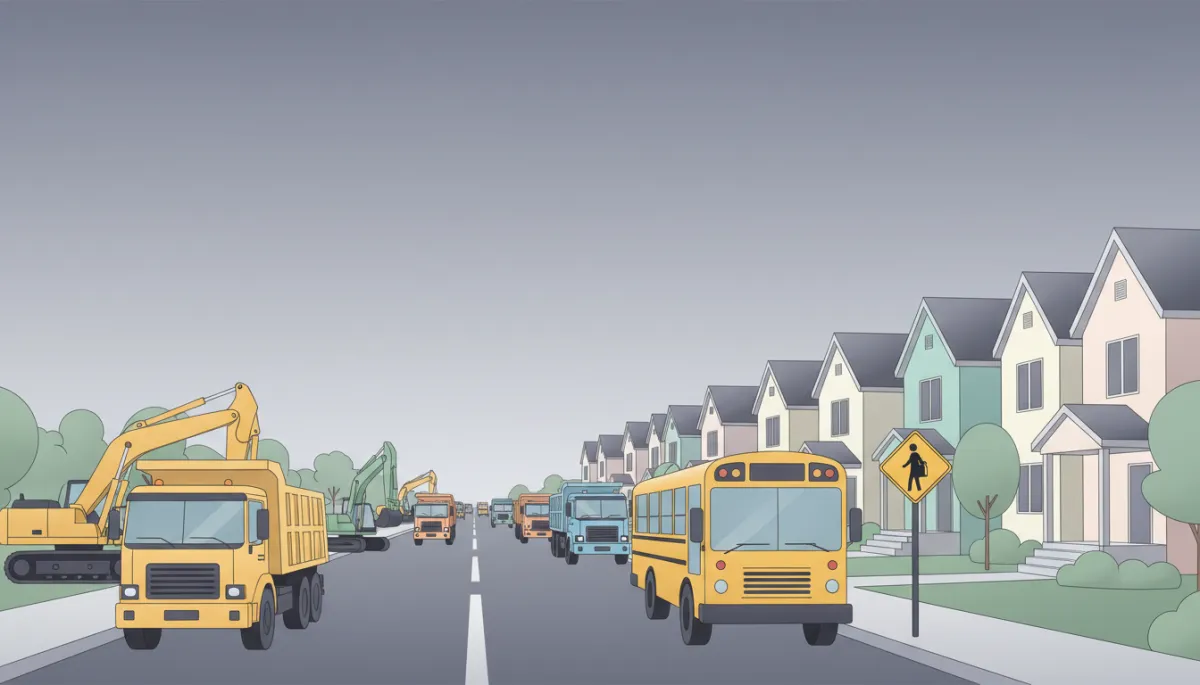
For many homeowners, “progress” looks less like opportunity and more like daily disruption.
Why Homeowners Are Frustrated
If you feel angry, exhausted, or just worn down by what’s happening around you, there are real reasons. Homeowners up and down the I‑95 corridor are talking about the same issues, over and over again:
Development pressure that never seems to stop. Every time you think things might slow down, there’s another rezoning request, another “technology campus,” another special exception. In Stafford alone, there have been more than a dozen data center projects in the pipeline in recent years, with millions of square feet planned or under construction. It feels like open land is just a waiting room for the next industrial project, not something your kids will ever get to enjoy as fields or woods.
Noise that doesn’t care what time it is. Construction starts early and ends late. Backup generators test on weekday mornings. Cooling equipment hums and whirs 24/7. Maybe it’s not deafening, but it’s always there — that background reminder that you now live next to a giant machine, not a quiet patch of Virginia countryside or suburbia.
Construction traffic turning local roads into job sites. Dump trucks, cranes, concrete mixers, contractor pickups — day after day, they chew up two‑lane roads that were never designed for this. School buses and commuters are stuck in the same mess. What used to be a 10‑minute drive can easily double, and it’s not like VDOT widens every road just because a data center shows up.
Utility strain and massive power demand. Data centers use staggering amounts of electricity and, in some cases, water for cooling. Dominion and other utilities are upgrading lines, building new substations, and stringing taller, heavier transmission lines. Homeowners are left wondering: will this mean more outages for us, higher rates, or both? And what happens when our quiet tree line gets replaced with a wall of steel towers and buzzing wires?
The character of the area changing right in front of you. You moved here for a certain feel — small‑town main streets, rural back roads, or at least neighborhoods that didn’t back up to industrial parks. Now, the landscape is shifting to something that looks and feels more corporate and more temporary, with huge windowless boxes dominating the skyline. That’s not the Virginia a lot of people thought they were buying into when they signed their mortgage.
Worries about long‑term property appeal. Will buyers line up to pay top dollar for a home that backs to a data center, a substation, or a six‑lane “improvement” that used to be a quiet road? Some markets near heavy industrial growth have seen buyers hesitate or demand discounts. Even if your official assessment goes up, that doesn’t always mean your actual resale experience will feel like a win, especially if your pool of interested buyers shrinks to only those willing to overlook the view and the noise.
Feeling unheard at meetings and hearings. You take time off work, show up to public hearings, write emails, sign petitions — and still watch projects get approved. You listen to consultants talk about “mitigation,” “buffers,” and “screening,” but no one can promise you that your quality of life will stay the same. Over time, it starts to feel like your voice is just a box they have to check, not something that actually changes outcomes.
Rising costs that don’t feel like they benefit you. Property taxes creep up. Insurance costs climb. Groceries, gas, and utilities all feel higher. You hear that data centers are bringing in millions in revenue — Stafford, for example, is already forecasting significant long‑term gains — but you’re still paying more every year and dealing with more headaches. It’s hard not to ask: if we’re giving up our quiet and our views, why does it still feel like we’re the ones footing the bill?
Data Centers May Bring Revenue — But Homeowners Still Have Questions
Let’s be honest: data centers are not coming to Virginia by accident. The state has positioned itself as a global hub, with nearly one‑fifth of the world’s hyperscale data centers. The industry brings serious money — construction jobs, some permanent positions, and huge machinery and property taxes that local governments love to talk about. Spotsylvania, Stafford, and Fredericksburg officials are looking at forecasts that show millions in annual revenue if these campuses build out as planned.
That revenue can fund schools, sheriff’s departments, parks, and infrastructure. In theory, it can help offset residential tax burdens. Lawmakers are even starting to push back a bit — for example, Virginia approved a first‑in‑the‑nation electricity‑use tax on data centers starting in 2026, which is a sign that the state knows these facilities put real strain on the grid and the environment. On paper, there are economic benefits and policy responses that sound responsible and forward‑thinking.
But from a homeowner’s perspective, that’s not the whole story. You’re the one living with the construction traffic, the changing views, the constant sense that your neighborhood is becoming a backdrop for someone else’s business model. You don’t see those tax dollars in your bank account. You see them as a line item on a budget slide in a meeting — while your day‑to‑day reality is getting more complicated and more stressful.
So yes, data centers may be “good for the economy.” But it’s completely fair to ask: Are they good for the people who already live here? And if the answer for you personally is “no,” then your next question naturally becomes: What am I supposed to do about it?
Spotsylvania, Stafford, Fredericksburg, and the I‑95 Corridor Are Watching Closely
The pressure you’re feeling isn’t just in your head — it’s baked into the way this region is being built out. Stafford has multiple massive projects underway or planned, including a 1‑gigawatt technology campus and other large‑scale developments. Spotsylvania is reviewing proposals for multi‑million‑square‑foot data center campuses near existing neighborhoods and commercial areas. Fredericksburg is analyzing the impact of its first major data center, with consultants projecting hundreds of jobs and hundreds of millions in economic output once it’s fully operational.
On top of that, industrial rents in the Fredericksburg region are climbing, and a huge share of the construction pipeline is tied to data centers. Translation: the people with money and influence are betting big on this corridor becoming a long‑term tech and infrastructure hub. That might sound exciting if you’re an investor or a county budget director. It feels a lot different if you’re a homeowner who just wanted a normal commute and a peaceful backyard.
The hard truth is that once this kind of regional growth machine gets moving, it rarely stops because a few neighborhoods are upset. That doesn’t mean your voice doesn’t matter — it does. It can shape buffers, routes, setbacks, and sometimes even stop the worst projects. But it also means you need to be clear‑eyed: the broader trend is not going away anytime soon. And if you’re trying to decide whether to stay or go, you have to look at the bigger picture, not just the single project next door.
When Growth Stops Feeling Like Progress
Growth is one of those words politicians love to use. It sounds positive, like opportunity and possibility. But for a lot of Virginia homeowners, especially around I‑95, growth stopped feeling like progress a long time ago. It feels more like being squeezed — by traffic, by taxes, by noise, by the constant sense that everything is getting bigger, faster, and more crowded while your quality of life shrinks around the edges.
Emotionally, that takes a toll. You might feel guilty for being frustrated, like you’re supposed to be grateful for “economic development.” You might feel stuck, wondering if you’ve missed your window to move somewhere quieter or more stable. You might argue with your spouse about whether to stay and “wait it out” or sell before the next big project breaks ground. It’s not just about roads and buildings — it’s about your sense of home, safety, and control over your own life.
When every headline is about another rezoning, another data center, another substation, it’s easy to feel like you’re living in a place that’s being planned for everyone except you. That frustration is valid. You’re not being dramatic. You’re reacting to real, measurable changes in your surroundings — and to the very human fear that the Virginia you loved is slipping away while you’re still paying the mortgage on it.
Should Data Center Growth Make You Sell Your Home?
This is the question a lot of people are quietly asking: with Spotsylvania data centers expanding, Stafford data centers rising out of the ground, and Fredericksburg data centers on the horizon, is it time to cash out and leave Virginia altogether? Or at least move to a part of the state that isn’t in the crosshairs of this growth pattern?
There’s no one‑size‑fits‑all answer. Some homeowners will decide to stay, either because they’re deeply rooted or because they believe the long‑term upside outweighs the downside. Others will decide that the constant construction, the utility strain, and the character change are not what they signed up for — and they’ll start planning a move out of Virginia or at least out of the immediate data center zones. What matters is that you make that decision based on facts and broader patterns, not just fear or frustration in the moment.
Here are a few big‑picture factors to think about as you decide whether data center growth should push you to sell:
Regional trend, not just one project. Look at the entire map, not just the site next door. Are there multiple campuses planned within a few miles? Are transmission lines being upgraded in your direction? Is your county actively courting more data centers? If the answer is yes, it’s fair to assume this is a long‑term trend, not a one‑off annoyance that will fade away.
Your personal timeline. If you planned to stay in your home for 2–3 years, that’s a very different calculation than if you thought you’d be there for 20. Shorter timelines can make it easier to pivot before the full build‑out hits. Longer timelines mean you have to think hard about whether you want to live with this evolving landscape for decades, not just a few construction seasons.
Market conditions right now. In many parts of Virginia, home prices are still strong, especially for well‑maintained properties in commuter‑friendly locations. But as more industrial projects pop up, buyers may start to distinguish more sharply between “clean residential” areas and “mixed with heavy infrastructure” areas. Getting ahead of that shift can matter for your bottom line if you’re thinking about leaving in the next few years anyway.
Your stress level and quality of life. This part is simple and deeply personal: are you exhausted by all of this? Do you feel like you’re constantly waiting for the next shoe to drop — the next rezoning sign, the next construction notice, the next lane closure? If your home no longer feels like a refuge, that’s not a small thing. It might be the clearest signal that it’s time to seriously explore your options.
Selling because of data centers isn’t “giving up” or being dramatic. It’s recognizing that the long‑term direction of your area doesn’t match the life you want — and choosing to move toward something that does. But if you’re going to make that kind of move, you need to do it with your eyes open and your numbers clear.
Before You Leave Virginia, Know Your Numbers
Emotionally, you might already be halfway out the door. But financially, you can’t afford to guess. If you’re thinking about leaving Virginia or moving out of the data center corridor, you need a clear picture of your home’s value, your equity, your selling costs, and what it would actually take to land on your feet in a new place — whether that’s another part of the state or another state entirely.
That’s where a Virginia Exit Plan comes in. Instead of just saying, “We should move someday,” you map out exactly what it would look like:
What your home is likely to sell for in the current market, given its location, condition, and how close it is to current or proposed data centers and utility infrastructure.
How much equity you actually walk away with after paying off your mortgage, covering closing costs, and handling any repairs or prep work buyers are likely to expect.
What it would cost to buy or rent in the kind of area you really want next — whether that’s a quieter part of Virginia or a different state with less aggressive industrial growth.
A realistic timeline for listing, selling, and relocating that fits your job, school, and family obligations instead of blowing them up.
You don’t have to figure all of that out alone. You need someone who actually understands what’s happening on the ground in Spotsylvania, Fredericksburg, Stafford, and Northern Virginia — someone who isn’t going to sugarcoat the impact of data centers but will also tell you honestly what buyers are paying and what your options look like in real numbers, not wishful thinking.
You Deserve to Feel at Home Again — With a Clear Plan
At the end of the day, this isn’t just about data centers, rezoning hearings, or county revenue forecasts. It’s about you being able to sit in your own living room and feel at peace — not constantly on edge about what’s going to get built next, whose truck is going to rumble past at 6 a.m., or how much more crowded your commute will be next year. Home is supposed to feel like yours. If Virginia no longer feels like the Virginia you chose, it’s okay to say that out loud and start planning your next move.
You don’t owe it to anyone to stay put while everything around you changes. But you also don’t owe it to anyone to panic‑sell or jump without a parachute. What you do deserve is a clear, honest, step‑by‑step plan that shows you exactly what leaving Virginia — or just leaving the data center corridor — would look like for your family, with your numbers and your goals in mind.
📌 If you’re a Virginia homeowner in Spotsylvania, Fredericksburg, Stafford, Northern Virginia, or any community feeling squeezed by data center growth and rapid development, you don’t have to figure this out alone. For a free, no‑pressure Virginia Exit Plan tailored to your situation, contact Alex Wilson directly at 540‑621‑1175 or email [email protected]. Get clear on your options before the next project breaks ground.